Learn More About Romania
Did You Know?
Romania is full of fascinating facts and surprises! Whether you scored perfectly on our quiz or learned something new, there's always more to discover about this amazing country. Romania is home to the world's heaviest building (Palace of Parliament), Europe's best-preserved Delta (Danube Delta), and the birthplace of many inventions including the fountain pen and insulin.
The country has produced numerous Nobel laureates, Olympic champions, and cultural icons. From Constantin Brâncuși's revolutionary sculptures to Mircea Eliade's influential writings on mythology and religion, Romanian contributions to world culture are significant. The Romanian language, while surrounded by Slavic languages, maintained its Latin roots, making it a linguistic island in Eastern Europe.
Romania's biodiversity is exceptional - it contains 5% of the EU's territory but 35% of its brown bears, 30% of its wolves, and 20% of its lynx. The Carpathian Mountains are sometimes called the "Green Pearl of Europe" due to their extensive virgin forests, which cover about 65% of Europe's remaining primeval forests.

Romania's UNESCO Heritage
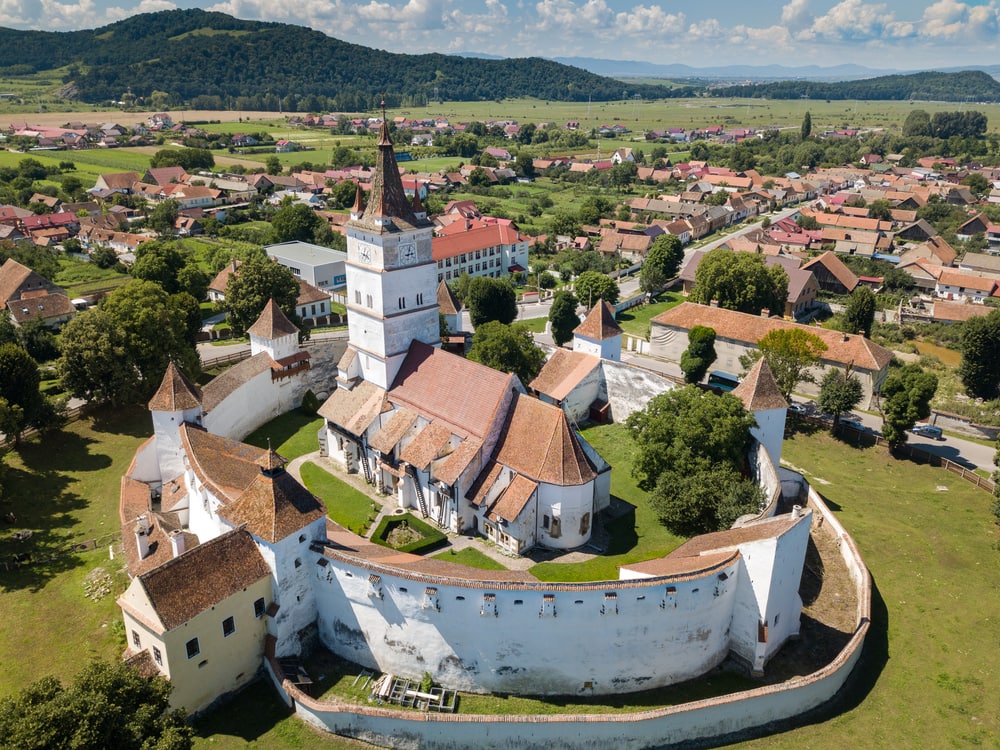
Romania boasts 8 UNESCO World Heritage Sites, including the Danube Delta, the historic center of Sighișoara, the wooden churches of Maramureș, the fortified churches of Transylvania, the painted monasteries of Bucovina, the Dacian fortresses of the Orăștie Mountains, and more. Each site represents a unique aspect of Romanian heritage and human achievement.
The painted monasteries of Bucovina are unique in the world - nowhere else will you find such elaborate exterior frescoes that have survived for over 500 years. The "Voroneț blue" used in these paintings is so distinctive that art historians compare it to the famous "Titian red" or "Veronese green" of the Italian Renaissance.
The fortified churches of Transylvania tell the story of the Saxon settlers who came to Romania in the 12th century. These farmer-warriors built over 300 fortified churches, of which about 150 still survive, seven being recognized by UNESCO. They represent a unique architectural solution to the challenges of medieval life in a frontier region.